



We have entered a new year. What happened to us in 2025? The tragedy in Kocani defined the entire year and will define many years to come. We thought that lessons had been learned but what happened next? People injured in traffic accidents on Partizanski Odredi Boulevard in Skopje. Once again, traffic accidents with tragic consequences, all across Macedonia. Please, if this is a bad dream, let someone wake me up.
They say that a wise person learns from the mistakes of others, while a fool learns from their own. So if we, as a country, have learned nothing from the past, what does that make us, what are we?
After Kocani, there was widespread discussion that doctors who came from other countries to Macedonia to help treat those injured in the nightclub fire were unable to hide their astonishment at how poor our healthcare system is. Whether this is truly the case, I do not know. But I do know that the suspicion that this is indeed true exists. At the very least, it was strange when a call was announced for donations of blankets and pajamas for the needs of the Clinical Center and the injured. That the largest clinical center in the country lacks basic necessities for patients. Misery.
And then summer began, fires everywhere. By coincidence? I do not know. They say that burned or partially burned wood is cut without compensation to the state and then sold at a lower price.
In any case, I personally find it illogical that in a country where forest fires are frequent during the summer, there is no burn center.
In conclusion, the healthcare system is ripe for change.
Let us return to the recent past. What became evident during the coronavirus pandemic is that, as a country, we are dependent on imports of flour, cooking oil, drinking milk, and many other products. Has anything changed? Has the only sunflower seed oil extraction plant in Macedonia started operating at full capacity, and if not, why? Could it be that there is not enough sunflower grown on our fields? Has the livestock population increased?
As far as I know, there is no significant capacity for pasta production (spaghetti, noodles, and the like) in Macedonia. I know for certain that cow’s milk and other types of milk are imported from neighboring countries. Let me remind you that in the 1990s, the sugar beet production system was dismantled, and the country’s only sugar producer was closed. All of this represents strategically wrong moves.
I publicly ask: is there a pilot in the plane? Even if there are development strategies, the fact is that they are unsuccessful. Honestly, I am tired of excuses the East does not respond, and the West does not register us. Politicians need to roll up their sleeves and do their homework. Once we prove our worth, the West will register us on its own (if we still want that).
The state, the government, must urgently review the strategies for development and the improvement of the economy as well as the quality of life.
According to data available online, Macedonian banks hold deposits totaling nearly 10 (ten) billion euros, around 6.45 billion euros from individuals and the rest from legal entities. On the other hand, we incur debt through various foreign credit lines. A way must be found for these 10 billion euros to be reinvested in the economy and yield returns through real business projects.
The idea is to combine the development strategies (local, regional, national) with the aforementioned 10 billion euros. How?
One way is to start with infrastructure and entrepreneurial initiatives by local governments and the national government. For example, a purchase center for early-season vegetables in Strumica or Gevgelija, or the construction of a high-speed rail line from Kumanovo to Gevgelija, and similar projects. In the first case, the local government, region, or government would establish a legal entity (company), and by selling shares of ownership in this entity, they would obtain part of the funds needed for construction and to start operations. This is, in a way, a public-private partnership.
In the second case, government bonds would be issued and sold by the state, with the funds specifically used for the construction of the infrastructure project. The bonds would have a limited term and a relatively favorable interest rate, and they could be traded before their maturity date.
The fastest way to utilize part of these 10 billion euros is for the state to start the construction of 3,000 state-owned apartments across the country. The price of these apartments should be guaranteed, not exceeding 1,000 euros per square meter in Skopje, and lower in other cities. In this way, the price of housing would be directly affected. It would demonstrate a real fight against the urban mafia and also motivate young people to buy an apartment and consider staying in the country.
Furthermore, citizens should be encouraged to use financial advisors who can guide investors (both legal entities and individuals) and facilitate their communication with banks.
And why not issue state guarantees for the construction or implementation of projects? The guarantees would be acceptable as collateral in banks in Macedonia and would serve as security for loans for the construction of strategically important investments.
As a country with a large diaspora, a way must be found to motivate our people to invest at home.
So that it does not seem that I only criticize, I will praise the self-employment project that provides support of 10,000 euros for young people and the unemployed.
One of the conditions for better and faster development is for the state to have quality projects that it can sell or seek partners from the private sector, its citizens, and of course, the diaspora, for their implementation.
For such projects to begin being implemented, the public administration must become professional, be reformed, and take responsibility for the shortcomings in its work. Of course, above all, the perception that public administration exists for party appointments must change. The mindset that public administration serves the party leader rather than the people of Macedonia must be changed.
Let’s dig a little deeper, that is, scratch beneath the surface. It is true that our power to effect change as citizens lies in elections, but after each election, the feeling remains that we have been deceived. Or, as the saying goes, Murto has stepped down, and Kurto has stepped up.
For true reform to begin, political parties must first be reformed, especially the major parties in our country. Parties should be places where ideas are developed and where concrete actions (in parliament and city councils) improve the lives of all citizens, not just a select few. Political parties must stop being sultan-like. Leaders need to understand that internal party democracy is also valuable. Definitely, the election model must change and be based on open lists. Then, in elections, it will be clear how many votes each representative is worth and how much they are supported and respected in their municipality and region. Their influence within the party should correspond to that.
And the longest journey begins with the first step, so let that step be taken toward the betterment of all.
M.Sc. Rade Cholovic
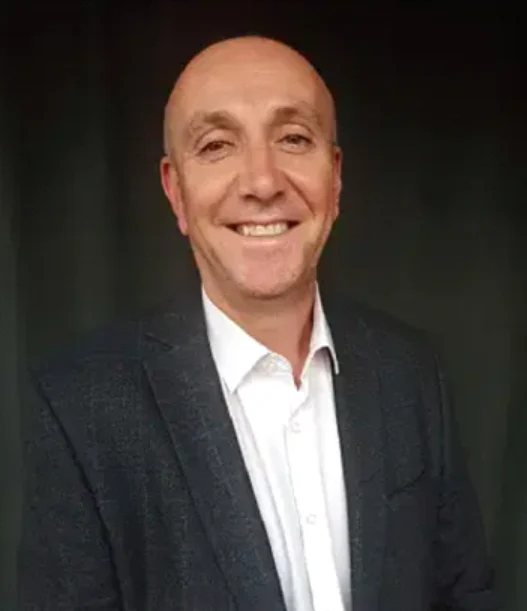
The views expressed in the column are those of the columnist and do not reflect the opinion or position of the editorial team of FROMMK.COM.
Downloading, copying, or unauthorized use of copyrighted content (texts) from this site is not allowed. In the event of misuse, appropriate legal action will be taken.