

These days, after reading a column written by a close friend and fellow party member, I believe it is time to say a few words about our fellow Macedonians of the Islamic faith—and to finally put this issue to rest once and for all.
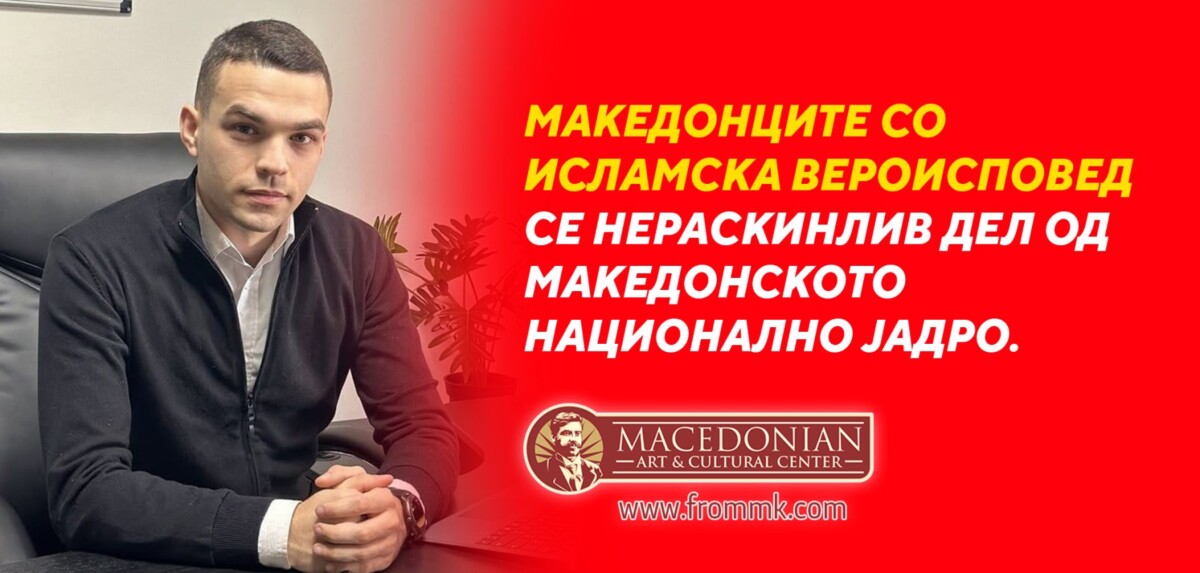
Macedonians of the Islamic faith are an inseparable part of Macedonia and of the Macedonian national core!
I am not writing this column as someone who discovered politics yesterday, who joined VMRO-DPMNE yesterday, or who only yesterday learned what Macedonia means. I am writing it as someone who is part of the second generation of the Youth Forces Union (UMS) of VMRO-DPMNE, as someone who comes from a VMRO family, and as the son of my late father, who was one of the founders of the UMS of VMRO-DPMNE.
I went through every step within the UMS—from a young man who stood firmly behind his beliefs to a person who today carries those same convictions with him even beyond Macedonia. That is why today, thousands of miles away, in America, in Chicago, I once again carry Macedonia with me.
I am also writing this introduction as someone who comes from Debar, who grew up there, and who has many Macedonian friends of the Islamic faith—people who have always stood shoulder to shoulder with me, whether it was for our national interests or at party events.
Why do I combine party and state events? Because VMRO-DPMNE is the last line of defense for Macedonia, and without VMRO-DPMNE, there will be no Macedonia!
Macedonian Muslims are an inseparable part of the Macedonian identity. When we speak about Macedonia, we must learn to make a clear distinction between nationality and religious affiliation. Faith is a personal and spiritual choice, while belonging to a nation is a historical, cultural, linguistic, and national category.
That is precisely why Macedonians of the Islamic faith are not “other” Macedonians, but an inseparable part of the Macedonian people. For generations, they have spoken the Macedonian language, lived and preserved Macedonian culture, maintained their family and local traditions, and, like every other Macedonian, carried Macedonia in their hearts.
Macedonian identity has never been, nor should it ever be, limited solely to religious affiliation. History, especially in the most difficult moments, best demonstrates who stood by their country.
In 2001, when Macedonia faced an armed conflict, many Macedonians of the Islamic faith from the western parts of the country—particularly from the Debar and Reka regions—voluntarily enlisted, filled the barracks and border posts, and took up arms to defend the state.
This is not merely an anecdote from the past, but part of the historical record of their belonging, loyalty, and love for Macedonia. That is why it is unjust and historically superficial to measure a person’s patriotism according to the religious community to which they belong.
Patriotism has no religion. It is demonstrated through actions, sacrifice, responsibility, and the willingness to stand by one’s homeland when times are hardest.
From the Debar and Reka regions and throughout the entire western part of Macedonia, to every Macedonian home around the world, there are people for whom Macedonia is more than just geography. It is language, memory, roots, and family. It is a sense of belonging.
And that is precisely why, when we speak about Macedonian Muslims, we should speak with respect, not suspicion—with historical awareness, not prejudice.
Macedonia is whole only when it recognizes and respects all its sons and daughters who feel that it is their homeland. We should not divide ourselves according to how we pray, but recognize one another through what unites us.
One country. One people. One language. One Macedonia.
And for all those who still wonder whether a Macedonian of the Islamic faith can be a true Macedonian patriot, the answer should not be sought in theory, but in history and in the deeds of the people themselves.
Here, I believe VMRO-DPMNE has a historic opportunity, but also an obligation, to continue its policy of opening doors, providing opportunities, and developing future leaders among Macedonians of the Islamic faith.
Over the years, VMRO-DPMNE has demonstrated that there is a place within its ranks for Macedonian Muslims, that they can be entrusted with responsibility, given opportunities, and provided with the space to contribute to the state and to the Organization. And that is how it should remain—not only today, not only during election periods, but tomorrow and the day after as well.
Because national policy is not built through a single statement or a single photograph, but through years of work, trust, and the development of generations who will know that Macedonia is their homeland.
A Macedonian of the Islamic faith should not be a guest in their own national story. They should not be someone’s “exception.” They should not be someone’s “category.”
They are part of the story. The same story. Part of the same Macedonian national core.
And I, as an Orthodox Macedonian from Debar, as someone who grew up alongside these people, and as a person who today carries Macedonia with him in America, have no doubt about this. Nor should anyone else.
Our strength does not lie in all of us being the same. Our strength lies in the fact that, despite our differences, we can remain united around one homeland, one language, one name, and one shared future.
Therefore, once and for all, let it be clear: A Macedonian is a Macedonian. No footnote. No conditions. No need for additional proof. Regardless of where they live and regardless of the faith in which they pray.
Macedonia is our common homeland. And the Macedonian national core is stronger when all of its parts stand together.
One Macedonia. One people. One national core. One struggle. One longing. One home. One future.
For Macedonia. For Macedonian identity. For all future generations who should grow up in a Macedonia where no one is ever asked whether they are “Macedonian enough.”
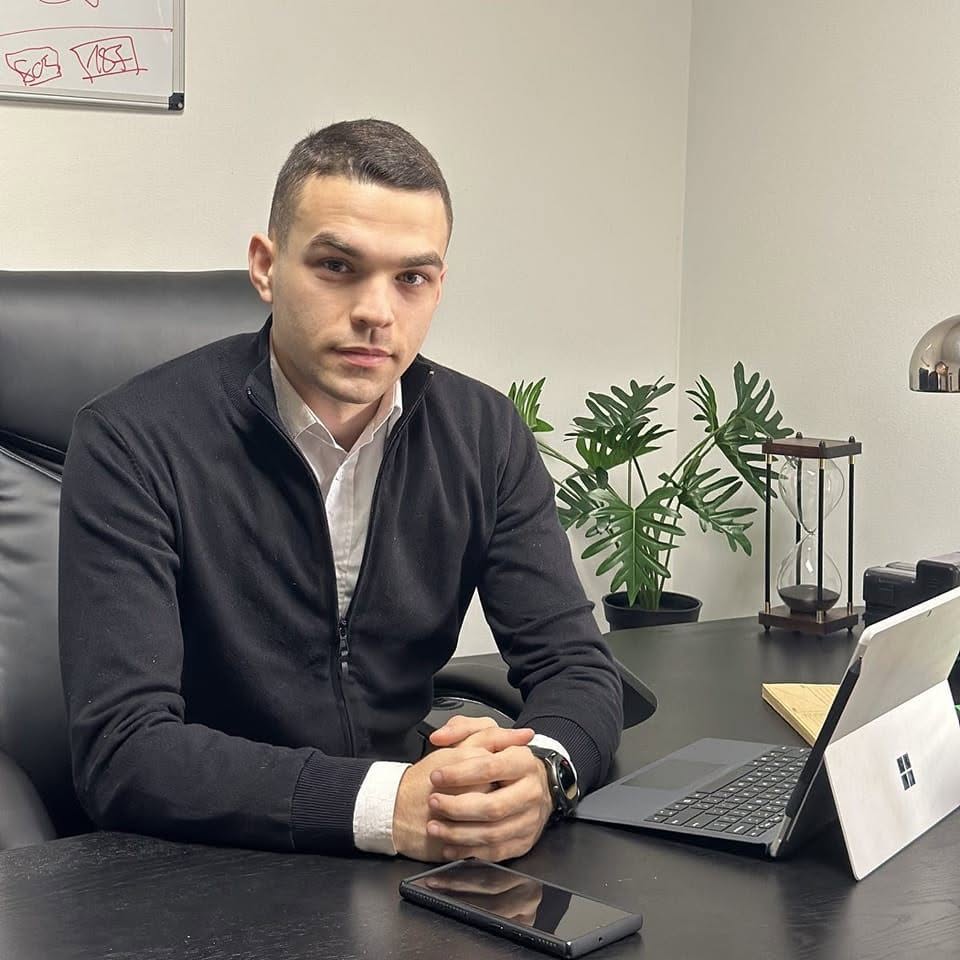
Columnist: Blazhe Strezoski
NOTE: The reproduction, copying, or unauthorized use of copyrighted content (including text and images) from this website is strictly prohibited. In the event of unauthorized use or infringement, appropriate legal action will be taken.